Article 227 gives the High Court a power of superintendence over subordinate courts and tribunals, not a second appeal. The Supreme Court has set aside two Bombay High Court judgments that had re-examined the valuation material behind a Charity Commissioner’s sanction to sell public trust land, holding that “the High Court has virtually acted like an Appellate Court”. A reasoned decision taken after an elaborate consideration of the relevant facts, it said, cannot be interfered with under Article 227.
Case at a glance
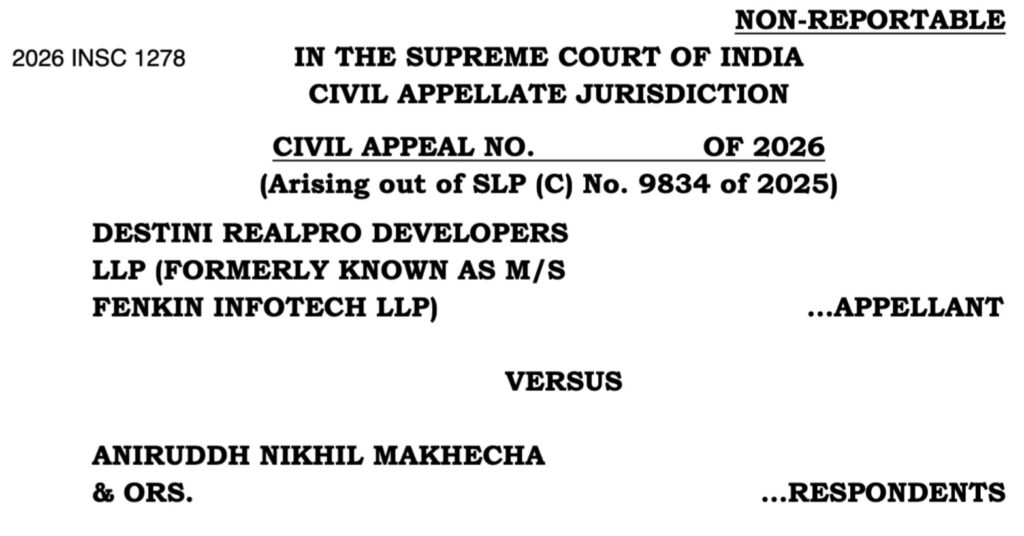
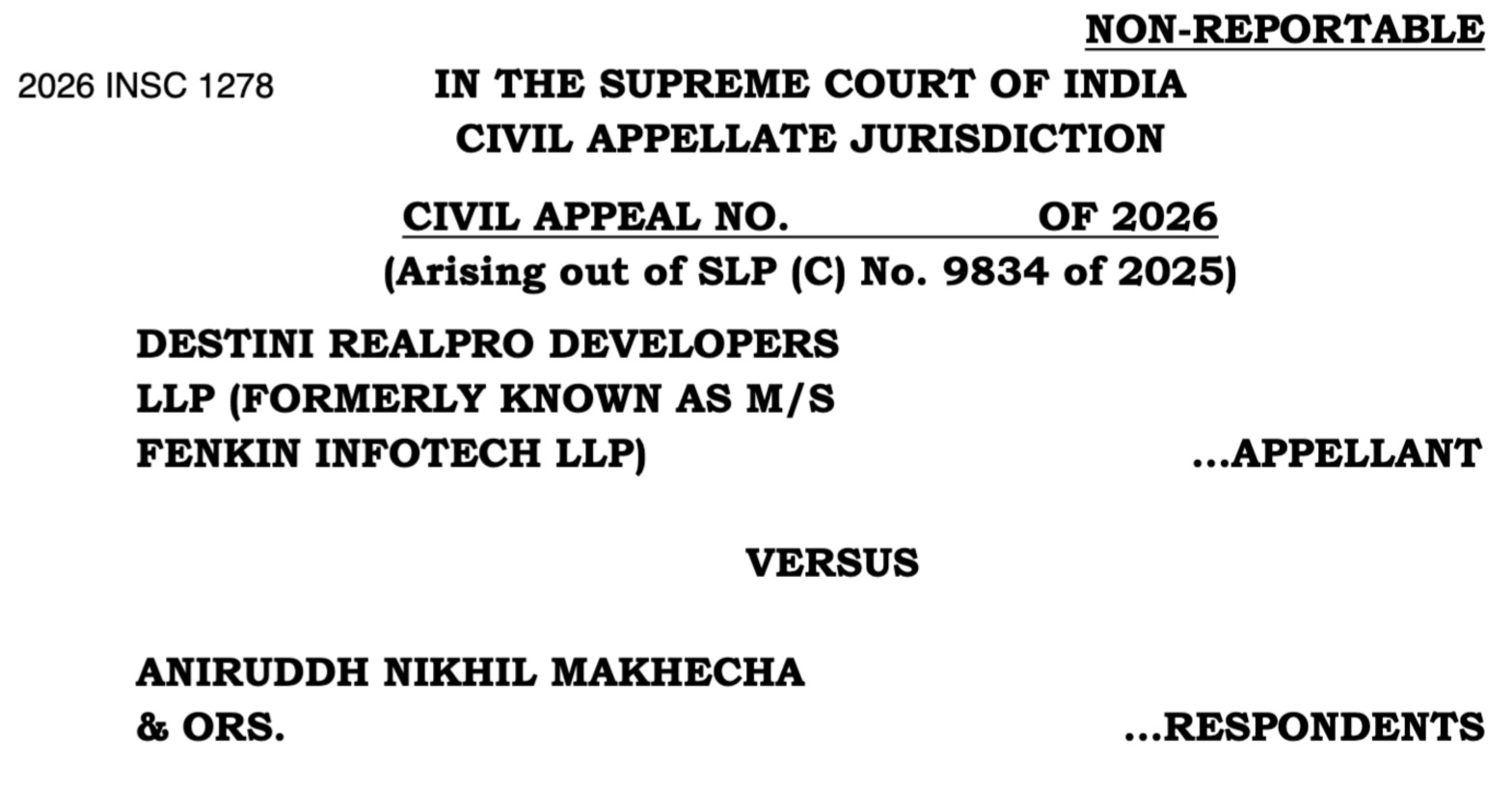
- Case: Destini Realpro Developers LLP (formerly M/s Fenkin Infotech LLP) v. Aniruddh Nikhil Makhecha & Ors., Civil Appeal arising out of SLP (C) No. 9834 of 2025, with connected appeals (including one by the Thane Municipal Corporation)
- Citation: 2026 INSC 1278 (Non-Reportable)
- Bench: Justice Pamidighantam Sri Narasimha and Justice Alok Aradhe (judgment by Justice Aradhe)
- Decided: 26 November 2026
- Law: Article 227 of the Constitution; Section 36(1)(a) of the Maharashtra Public Trusts Act, 1950
- Result: appeals allowed; Bombay High Court judgments set aside; the Charity Commissioner’s sale sanctions, the registered conveyance deed of 6 September 2024 and the transfer of part of the land to the Thane Municipal Corporation restored
The facts
The Ratanshi Premji Charitable Trust decided to sell two parcels of land in Thane, citing their difficult topography, encroachments, pending litigation and its inability to manage and protect them. It issued public notices, received bids and selected the highest bidder, Destini Realpro. The Charity Commissioner granted sanction under Section 36(1)(a) after considering two valuation reports and imposing conditions to protect the Trust.
In petitions under Article 227, the Bombay High Court set aside the sanctions. It found that the Charity Commissioner had not properly scrutinised the valuation reports, the reduced saleable area and the negative weightages, annulled the conveyance deed and sent the matter back.
What the Supreme Court held
1. The limits of Article 227
Restating settled law (para 29), the Court recalled that the power of superintendence is to be exercised “most sparingly and only in appropriate cases”, to keep subordinate courts within their authority and “not for correcting mere errors” (Waryam Singh v. Amarnath, a Constitution Bench). The High Court does not sit as an appellate court or substitute its own judgment; it can interfere where findings rest on no evidence or are so perverse that no reasonable person could reach them (Estralla Rubber v. Dass Estate; Shalini Shyam Shetty v. Rajendra Shankar Patil).
2. The High Court acted like an appellate court
“The High Court has virtually acted like an Appellate Court while examining the validity of the decision of the Charity Commissioner.”
The Court listed the High Court’s errors (para 31). It ignored the trustees’ decision, the public notices, the multiple bids and the valuation report, and its finding that no transparent process was followed was “contrary to the record”. It also overlooked that the negative weightages in the valuations reflected land reservation, coastal regulation zone, green zone and forest zone restrictions, and it ignored the second valuation report obtained by the Charity Commissioner.
3. Superintendence, not appeal
“The High Court ought to have appreciated that it is neither exercising original jurisdiction nor an appellate jurisdiction but jurisdiction of superintendence” (para 32). Section 36 does not contemplate a trial; the Charity Commissioner must reach his satisfaction on the material before him, and here he had considered the interest, benefit and protection of the Trust.
Why it matters
- For litigants and lawyers: an Article 227 petition cannot be used to re-argue facts or valuation. Show perversity, no evidence, lack of jurisdiction or a flagrant violation of law.
- For trusts and buyers: a sale sanctioned after public notice, open bids and independent valuation will not be lightly upset.
- For law students: a handy summary of the Article 227 line of cases, from Waryam Singh to Shalini Shyam Shetty.